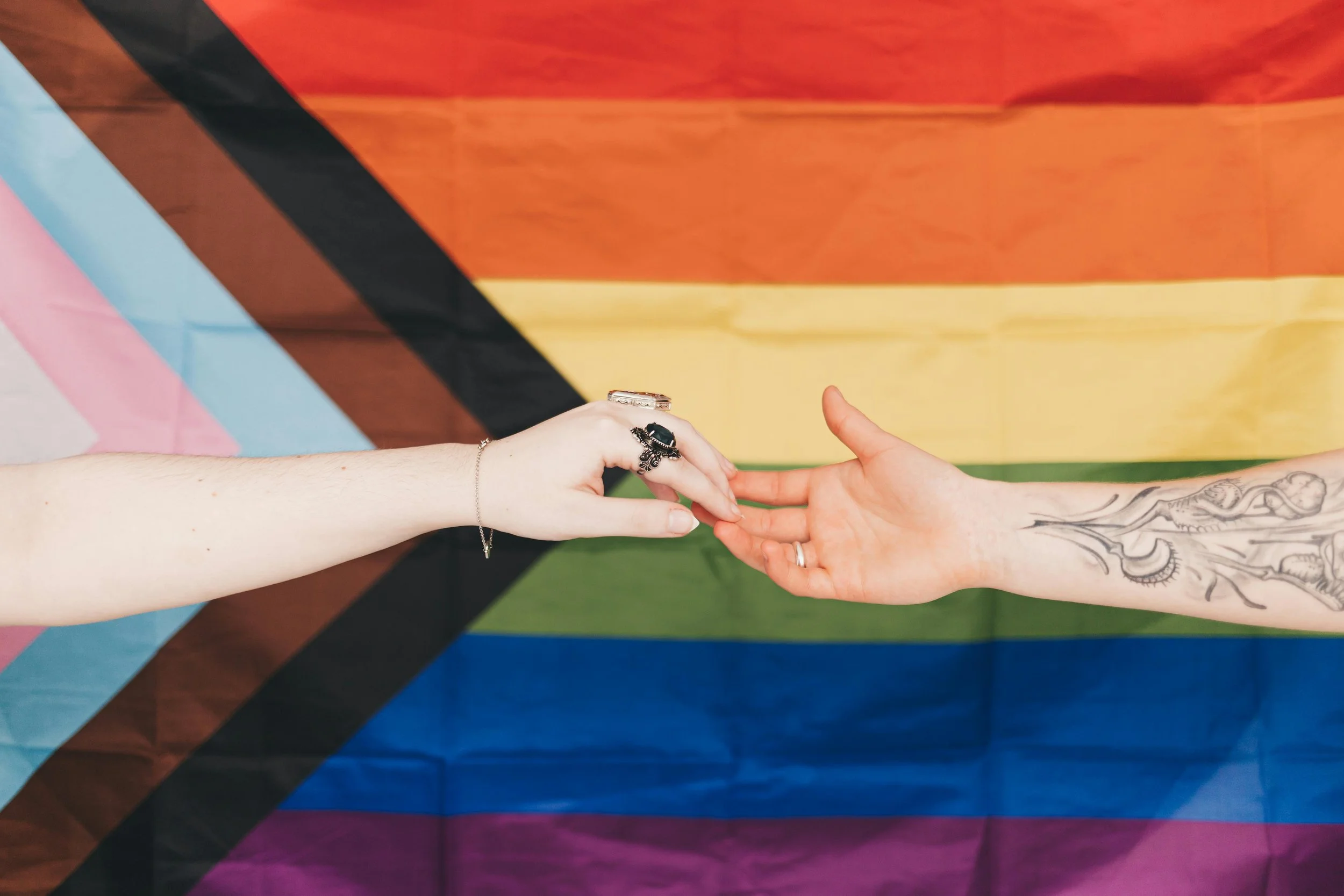
I Made Pride & Iron because when I needed it wasn’t there. Now I am, for you.
Hi, I'm Alexi.
Personal trainer, trans woman, late lifter, and the person behind Pride & Iron
I'm a queer, trans, personal trainer and I started Pride & Iron because I needed it to exist.
When I began my own fitness journey I was trying to figure out how to train a body that was changing. After I started HRT, I quickly found that how my body responded to training was shifting: my energy levels, my recovery needs, and gradually my relationship with my own reflection. I also learned, through trial and error, that as my body changed the kind of support it needed to stay healthy changed too. All of this had a huge impact on my self-confidence, my identity, and how I expressed and felt comfortable in my gender. There was almost no guidance written for people like me, and what little existed was buried in medical language that didn't speak to the lived reality of actually trying to show up to a gym and lift something.
Just showing up was its own battle. The gym is a daunting place for people, and being queer adds a whole new set of barriers between you and your goals. When exercise is such a well-evidenced means of supporting good mental health, it is almost tragic that the very places we go to exercise can feel so jarringly hostile to those who need that support most. Gyms often feel hyper-masculine, heavily hetero- and cis-normative, leaving queer and neurodivergent people feeling hypervisible, isolated, and unwelcome. I found my way through that with the help of supportive and well-informed friends and a lot of research, and now I want to help others do the same.
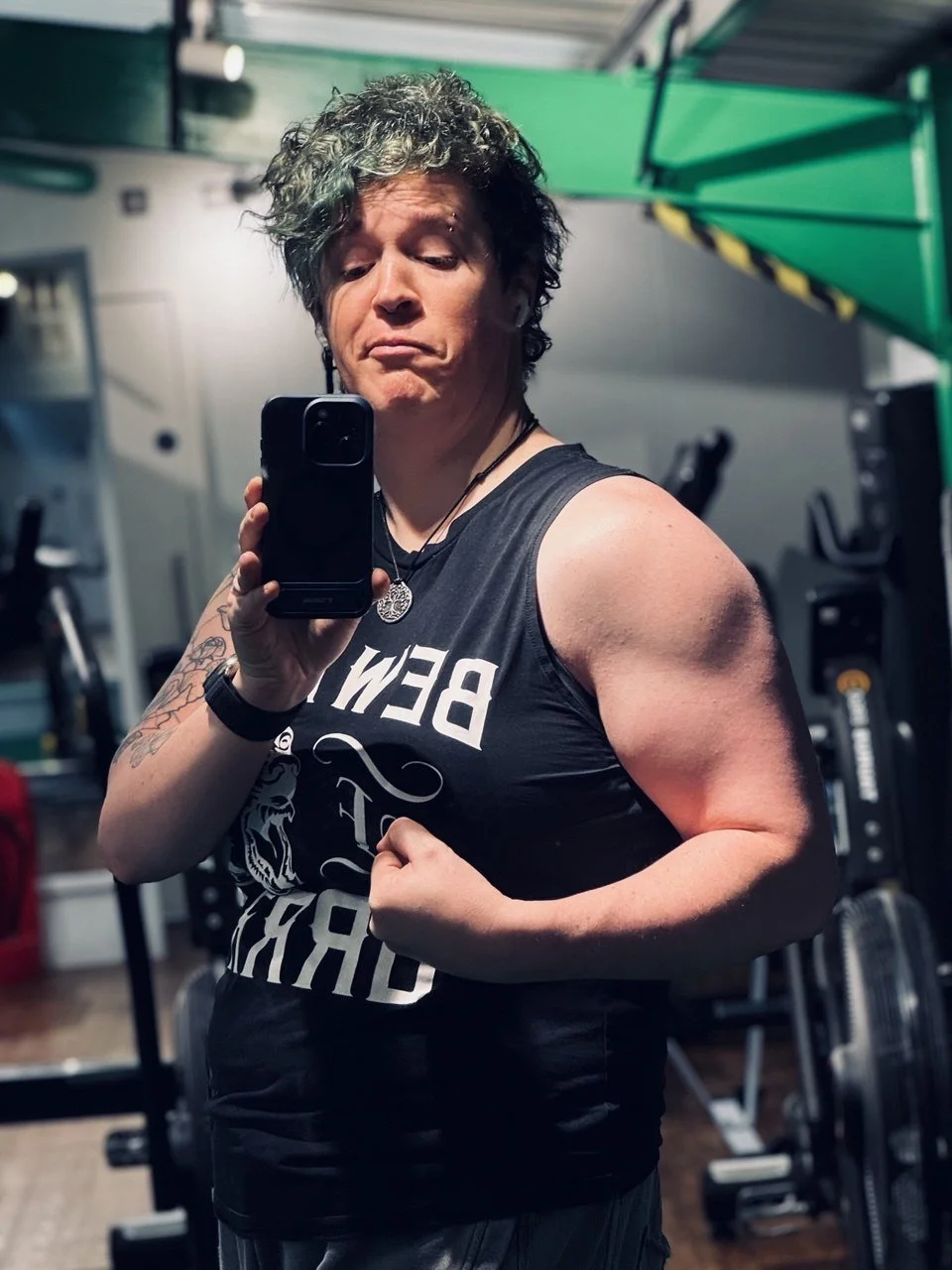
Training with a body-affirming goal
Training also became something I needed to take seriously for reasons that went beyond general health. I first committed to exercise and training when I was finally given a surgery date, and alongside that date came a set of numbers I was told I had to reach in order to be allowed to become myself. There was no guide, no manual, no set of suggestions for how to get there or what else to consider to make the journey more achievable and the recovery afterwards easier.
Working with my own brain
Alongside all of this, I was learning to understand my own brain. I finally received an ADHD diagnosis in my late thirties, despite having a fairly strong suspicion for years that I was far from neurotypical. That diagnosis gave me a new understanding of why "off-the-shelf" approaches to building routines had so rarely worked for me, and why conventional methods of motivation so often fell flat. I'm still learning how best to work with my own neurodivergence, but I'm bringing those lessons and the hard-won understanding that comes with them into every client relationship. Building sustainable fitness habits looks very different when you factor in executive function, sensory sensitivities, and a brain that doesn't always respond to standard motivation techniques. Learning to work with myself rather than against myself was a turning point.
I've been working as a personal trainer for queer friends and family, in person and remotely, for several years, and I now run Pride & Iron from my private studio in Reading, with online coaching available to clients everywhere. I specialise in strength training, general fitness, sports performance, and gym confidence, with a particular focus on trans and non-binary clients navigating fitness alongside HRT or medical transition, neurodivergent clients building sustainable habits, and anyone who's ever stood outside a gym door and talked themselves out of going in.
What do i do now
How I work
I believe that fitness should work for you, not the other way around. That means building a programme around your body, your goals, your life, and your neurology, not a generic template that ignores all of the things that make you you.
I do not believe in punishment-based training, shame, or the idea that results only count if they were painful to achieve. Progress is progress. Showing up on a hard day is progress. Learning one new thing about how your body works is progress.
I also take inclusion seriously, not as a marketing point, but because I have lived the experience of not feeling welcome in fitness spaces and I will not recreate that for anyone who comes to me for help. This is a space where you are allowed to take up room, train at your own pace, and be exactly who you are.
Community first. Strength follows.
That's the order. It's deliberate. Belonging comes before performance. If you don't feel safe in the room, the room will never make you stronger.
Five things I take seriously:
Pronouns and names. Always. Without making a thing of it. Including changing them whenever you ask.
Sensory environment. The studio has lighting you can dim, music you can change, and a door you can shut.
Bodies belong to the people in them. I don't weigh you, measure you, or ask about food unless you bring it up first.
Plain language. No jargon, no acronyms, no industry posturing. If a thing has a simpler name, that's the one I'll use.
Stopping is fine. Cancelling is fine. Crying is fine. Coming back is fine. None of it is the end of anything.